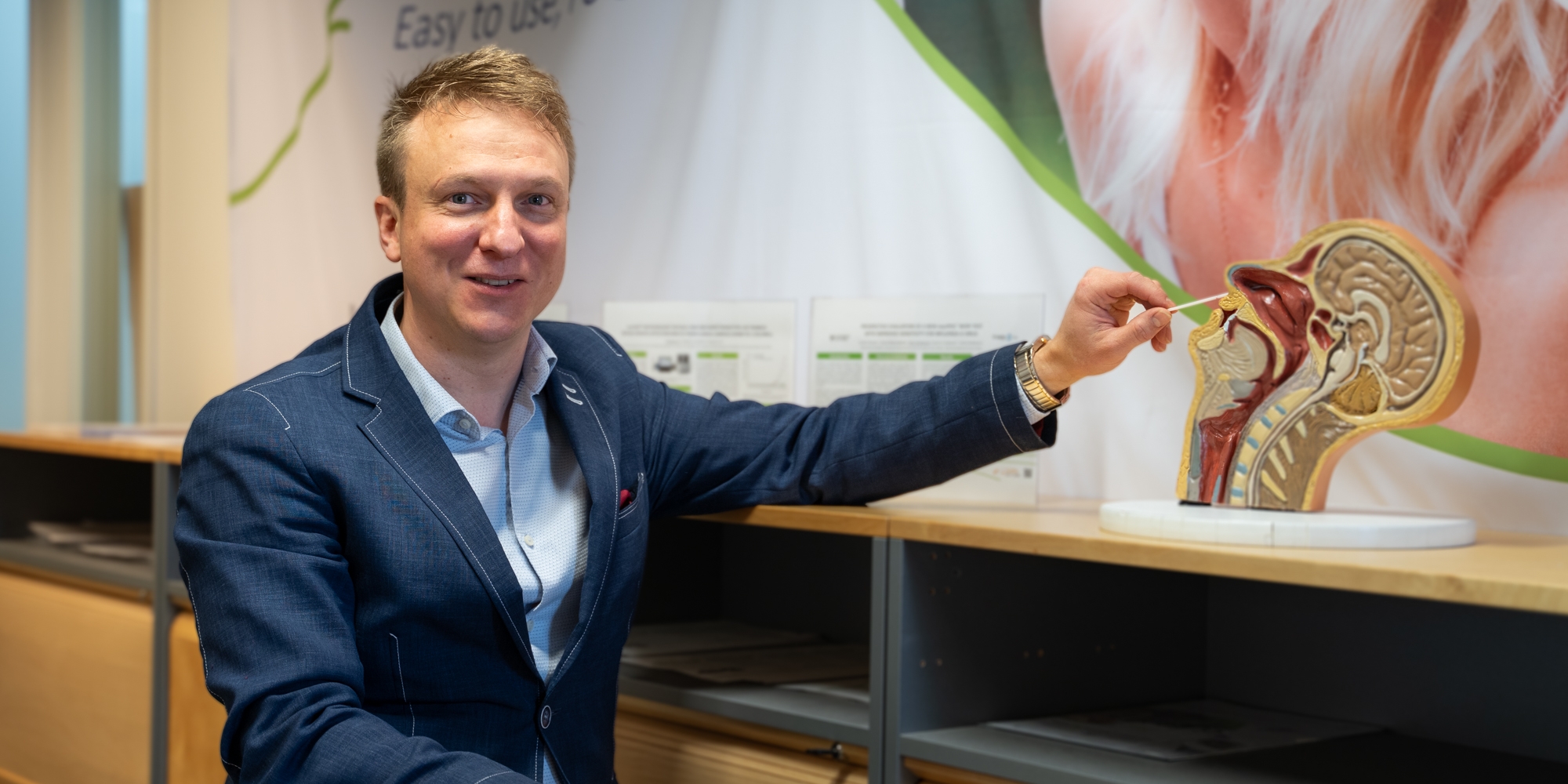
The goal of the diagnostics company ArcDia, based in the Turku Science Park, is that no one should have to take unnecessary antibiotic courses and that one could recover from a cold quickly.
Sometimes antibiotics can save lives, but they are also known to cause obesity, yeast infections, and even cancer. Despite this, they are still prescribed far too often. If patients were tested to identify the pathogen before prescribing antibiotics, every other antibiotic course could be avoided as unnecessary.
– Excessive use of antibiotics is a real threat to us all. Antibiotics affect gut microbes and, through that, a person's overall well-being. Furthermore, bacteria are becoming resistant to antibiotics, which threatens to make surgical procedures or, for example, childbirth life-threatening because antibiotics are no longer effective, says Janne Koskinen, CEO of ArcDia, a company specialising in infectious disease diagnostics.
ArcDia is a company based in TriviumCity that develops and manufactures automated rapid infection tests. The company's story began in the early 2000s at the University of Turku, where the development of rapid diagnostics for infectious diseases was being researched.
– In my doctoral dissertation in the field of biotechnology, I studied how a new diagnostic technology developed in Turku would be suitable for rapid testing. Professor of Bacteriology Pentti Huovinen, who acted as our mentor, “ordered” a device from my research group that would enable the rapid detection of 10 pathogens in a single test. This multidisciplinary cooperation gave birth to the mariPOC® test device, which can test for up to 11 pathogens in 20 minutes with a single test.
In Turku, those who have caught a cold can speed up their recovery by visiting a Flunssapiste test point in the courtyard of TriviumCity.
ArcDia was founded around this technology and began operations in 2008, with Koskinen moving to lead the company's product development, production setup, and quality system development. ArcDia's purpose was to commercialise mariPOC® and bring laboratory-level diagnostics directly to clinics. This would make doctors' work easier, ensure medication could be chosen correctly with confidence, and help the patient recover as quickly as possible with minimal side effects.
ArcDia brought its first products to the market in 2011. Currently, the company has 20 employees and is the Finnish market leader in automated rapid testing for respiratory infections. Half of ArcDia's sales come from Finland and half from abroad; in Finland, its mariPOC® test devices are used by, for example, Mehiläinen, Pikkujätti, Lääkärikeskus Aava, and TYKS.
– To ensure that every cold patient in need of treatment can be tested, testing should be easily accessible and affordable. To meet this need, we recently developed the Flunssapiste concept, where the rapid tests used by professionals are made available as a testing service directly to consumers, for example through pharmacy health points.
In Turku, those who have caught a cold can speed up their recovery by visiting a Flunssapiste test point in the courtyard of TriviumCity. Based on the test results, a doctor can prescribe antibiotics or antiviral medication to the patient as needed.
– We perform strep throat and cold tests in Turku. There are two scopes of cold tests, from which the sick person can choose either a package that identifies four or 10 viruses. The results arrive via text message within a couple of hours, and they are also recorded in the Kanta service.
Without reliable testing, the attempt to avoid antibiotics can even lead to the loss of human lives.
– A regrettable example of the consequences of a wrong diagnosis is the death of a four-year-old girl reported in the news this spring, which was caused by group A streptococcus bacteria. Streptococcus is most often easily treatable with antibiotics, but precise treatment requires making a correct diagnosis quickly.