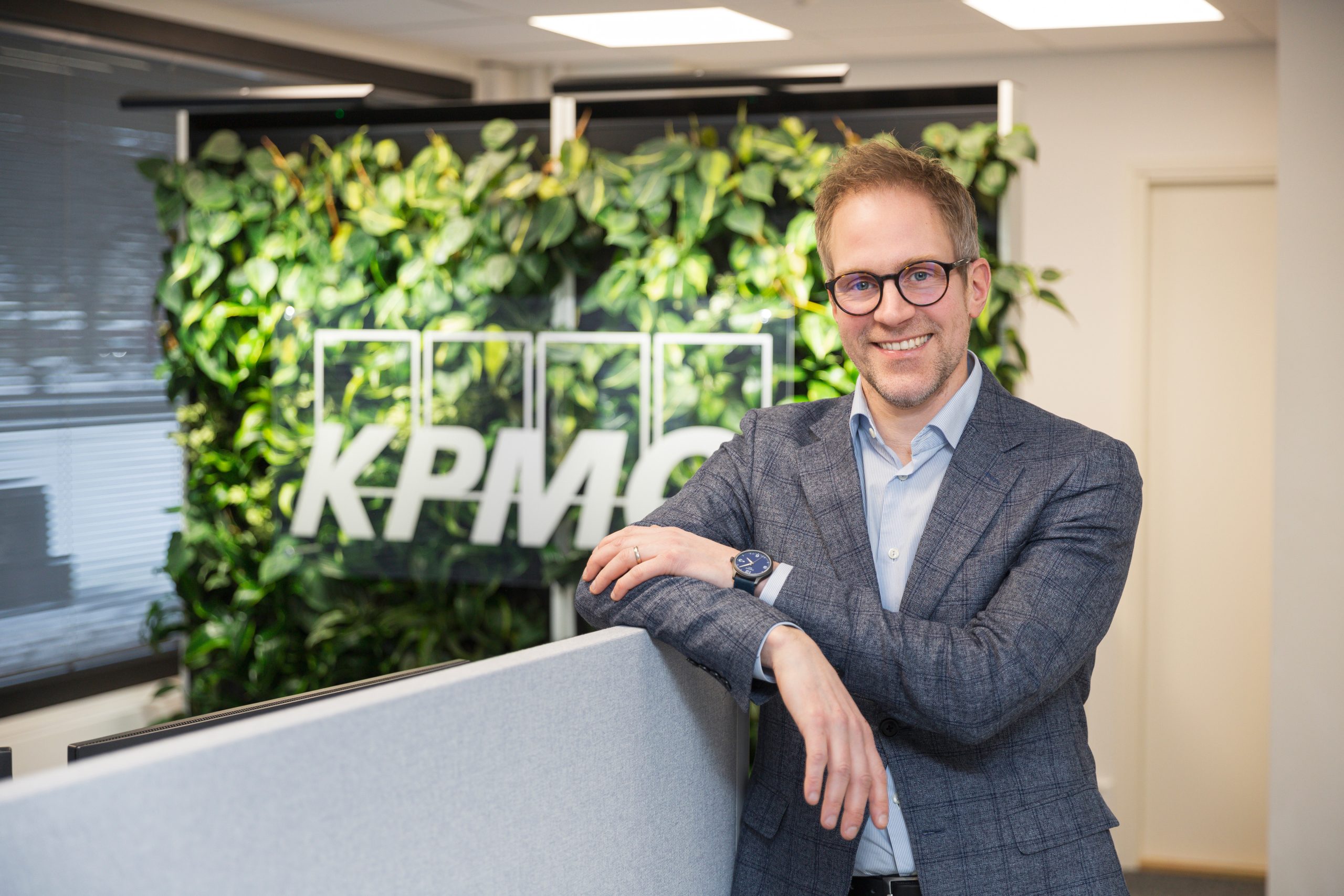
Sustainability reporting, which has now become mandatory, will be a huge change for business operations. It is worth taking this seriously, as it will affect almost every company, at least indirectly, says Niklas Oikia, Regional Director at KPMG Finland.
Large companies will be required to report on their sustainability matters in the future. This so-called sustainability reporting will become mandatory in phases over the coming years. This is based on the new sustainability reporting directive, the Corporate Sustainability Reporting Directive (CSRD), which has entered into force due to EU regulation.
– This reform is a huge change for companies. It is not just a single sheet of paper; a sustainability report can, in terms of workload and scope, correspond roughly to an annual financial statement. It can therefore even double the reporting obligation for the companies it affects, says KPMG Finland’s Regional Director Niklas Oikia.
– Especially now in the transition phase, this creates a significant amount of work as the matter is new. Companies may not necessarily have the resources or expertise to produce the report, so they need external help.
KPMG is an international consulting firm offering services such as audit and assurance, tax and legal services, and management consulting. Recently, the company has thoroughly familiarized itself with the practices and assurance of the new sustainability reporting requirements. Oikia, who is responsible for the company’s operations in Western Finland, has himself qualified as a sustainability reporting auditor among the first in Finland.
As of the beginning of this year, sustainability reporting became mandatory for almost all publicly listed companies. The report must be included in the company's financial statements in 2025.
In the second phase in 2025, the report will also become mandatory for larger non-listed companies. According to Oikia's estimate, it will then directly affect about a hundred companies in the Southwest Finland region. Indirectly, its significance is much broader.
– In the future, companies must report sustainability data not only on their own operations but also on the entire value chain. This means that large operators will also be requesting this information from their subcontractors, and through that, the matter will soon affect almost every company. It is therefore worth starting to prepare, Oikia says.
“If Finland manages its reporting in an exemplary manner, we will soon have a significant competitive advantage compared to many other countries.” Niklas Oikia, Regional Lead, KPMG Finland
He notes that in the Turku region, the matter will likely concern all those companies that work with, for example, the pharmaceutical industry.
– It is easy to think that as soon as the EU issues instructions, Finland acts as a model student and does everything, even if it didn't have to. But that is not what this is about. We operate in a global market, and large companies are often the end users of the value chain. If you want to be their partner, it is worth getting your sustainability matters in order as early as possible.
Oikia estimates that Finnish companies are already acting quite responsibly, but they don't know how to communicate it well enough. Soon, however, the situation may be different.
– If Finland handles the reporting in an exemplary manner, we will soon have a significant competitive advantage compared to many other countries.
Oikia hopes that companies understand that reports are not being demanded just for the sake of reports. The goal is to steer corporate practices in a more responsible direction, towards more sustainable business.
– One motive for getting things in order in companies is also money. Banks and investors no longer want to work with companies that do not act responsibly. In such cases, obtaining financing becomes very difficult.

Checklist for companies
Identify your company’s sustainability impacts as well as the related financial risks and opportunities. Determine whether your company will need to report in the future. If not yet, when might revenue growth or the company’s internationalization change the situation?
What happens in the future? If the company has to report on sustainability at some point, is all the necessary information already compiled? Do I have the time and expertise in my company to compile the information, or do I need external help?

Sustainability reporting is expanding in phases
In responsibility reporting, or ESG reporting, a company reports on the environmental, social, and economic impacts of its operations. The acronym ESG comes from the English terms environmental, social, and governance. Companies may define for themselves which of these responsibility themes are relevant to them and report accordingly.
From 2024 onwards, sustainability reporting will apply to large companies with over 500 employees operating in EU regulated markets. Reporting begins in 2025.
From 2025 onwards, the obligation will extend to listed and unlisted companies that meet at least two of the following three criteria: a balance sheet total of at least 25 million euros, a net turnover of at least 50 million euros during the financial year, and an average of 250 employees. These must report from 2026 onwards.
In 2026, the obligation will extend to listed SMEs as well as certain small and medium-sized credit institutions and insurance companies. Reporting must be done from 2027 onwards.
In 2028, reporting obligations will also apply to non-EU companies that have a subsidiary or a permanent establishment in the EU and whose net turnover in the EU exceeds 150 million euros. Reporting must be done from 2029 onwards.
Source: Suomen Tilintarkastajat (Finnish Auditors)
KPMG OY AB
Industry: audit
Founded: 1926
Employees: 1800
Revenue: 225 M€ (2023)